What Happens if Your Vision Changes After You Get LASIK?
Laser vision correction delivers remarkably stable, long-lasting results for the vast majority of patients. But “long-lasting” doesn’t mean “frozen in time.” Your eyes belong to a body that keeps aging, and that simple fact sometimes raises a worried question years after a successful procedure: Did my LASIK fail?
In almost every case, the answer is no. Here’s what’s actually happening when vision shifts after LASIK, and what you can do about it.
LASIK Corrects Your Cornea, Not Your Aging Process
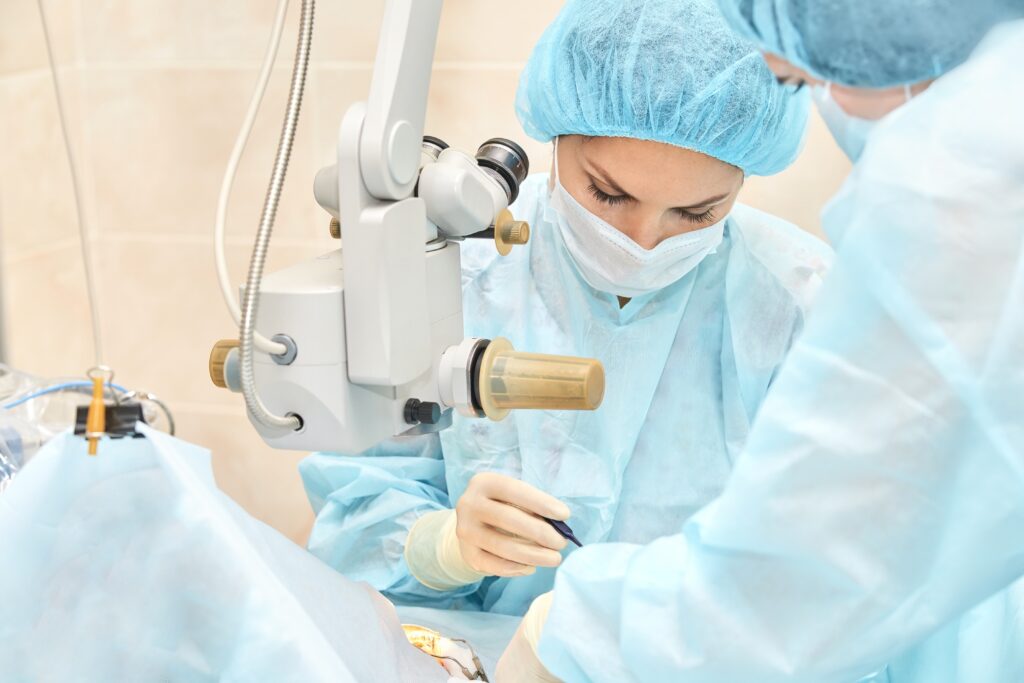
LASIK reshapes the cornea to correct the refractive error present at the time of your procedure, whether that’s nearsightedness, farsightedness, or astigmatism. Once the cornea heals into its new shape, that correction tends to hold steady for life. LASIK doesn’t wear off, and the results don’t gradually fade the way some patients fear.
What LASIK can’t do is stop the rest of your eye from aging. Two separate processes account for nearly every case of vision change after LASIK, and neither one reflects a problem with your original procedure.
Why Vision Changes After LASIK
Presbyopia
If you had LASIK in your 20s or 30s and now find yourself reaching for reading glasses in your 40s or 50s, you’re experiencing presbyopia. The eye’s natural lens gradually loses flexibility with age, making it harder to focus on near objects. This happens to everyone eventually, regardless of whether they’ve had LASIK, and it has nothing to do with your cornea or your original results.
Mild Refractive Regression
A smaller number of patients notice their distance vision drift slightly over the years following LASIK. This typically happens because the eye itself continues to change shape gradually over time, a process that occurs in people who’ve never had any vision correction at all. For most patients, this shift stays minor and barely noticeable. For others, particularly those who had a very high prescription before their original procedure, the drift can become more apparent.
Cataracts
As patients move into their 50s, 60s, and beyond, the natural lens can develop cataracts, a clouding that gradually affects vision quality regardless of LASIK history. Cataracts form independently of your earlier procedure and represent a normal part of aging for nearly everyone who lives long enough.
Request a Consultation
We’d love to help you get all the information you need in order to make the best choice for your eyes. Request a consultation today! Our staff is available and happy to answer your every question.
What to Do If Your Vision Changes
The right next step depends on what’s driving the change, so a thorough eye exam comes first.
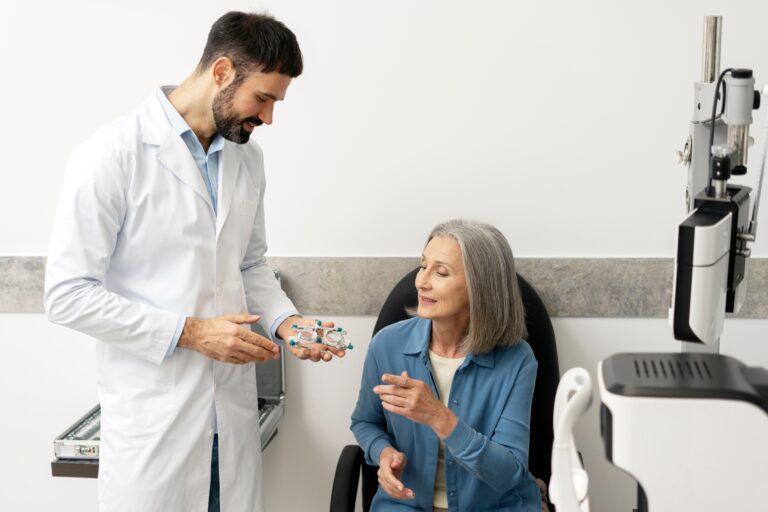
Schedule a comprehensive evaluation. Your surgeon at Visionmax Eye Centre will measure your current prescription, examine your corneal health, and assess your natural lens to identify exactly what’s changed since your original procedure.
Consider an enhancement. If mild refractive regression accounts for the change and your cornea has adequate remaining tissue, a LASIK enhancement can fine-tune your original results, often with a faster, simpler recovery than your first procedure.
Explore PRESBYOND for presbyopia. If reading vision has become the main frustration, PRESBYOND Laser Blended Vision builds on your LASIK history to address near, intermediate, and distance vision together, often without requiring you to give up the clarity you already have.
Look at custom lens replacement. For patients dealing with presbyopia, significant refractive drift, or early cataract changes, custom lens exchange replaces the natural lens entirely. This approach addresses multiple issues at once and eliminates any future risk of cataracts, since the lens most likely to develop them is no longer there.
Your Original Results Still Matter
A change in your vision years after LASIK doesn’t erase what your original procedure accomplished. It simply means your eyes have continued the same aging process every eye goes through, LASIK or not. The difference is that you now have more information about your eyes, more advanced treatment options than existed when you first had LASIK, and a clear path to address whatever’s changed.
Noticing a change in your vision since your original procedure? Book a consultation at Visionmax Eye Centre to find out exactly what’s going on and what your best next step looks like.
Take the Next Step
To learn more about whether you’re a candidate for LASIK, please schedule your consultation by either filling out the form on this page or by calling (866) 458-1545. We look forward to helping you!